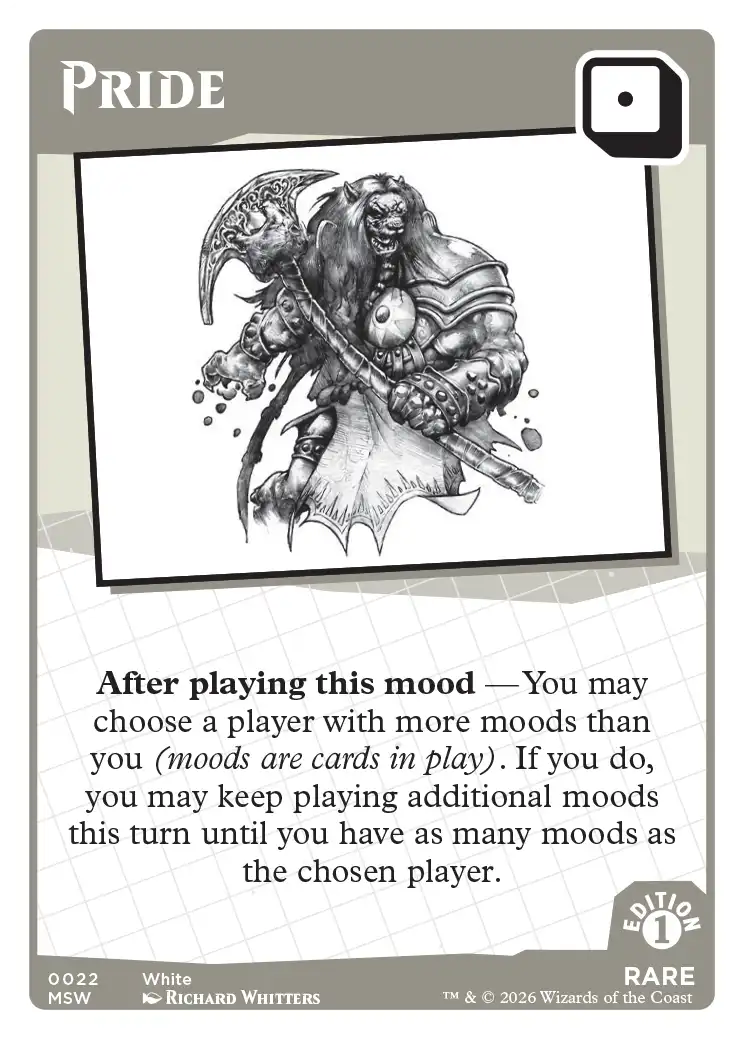
Pride
1After playing this mood — You may choose a player with more moods than you (moods are cards in play). If you do, you may keep playing additional moods this turn until you have as many moods as the chosen player.
6 notes
- "May" means this effect is optional. You may just play the card for its score and not do its effect.
- You can play that additional card for the rest of your turn. If multiple cards grant you additional cards, those can be played in any order. For example, let's say you have Hurt Feelings and play Pride. You may first play the additional card for Hurt Feelings before you play the additional card(s) for Pride. You do want to make it clear which additional card is being played for each effect.
- If no player has more moods than you, this card has no effect and has a value of [1].
- You can keep playing extra cards until you have as many moods in play as the player who has the most. For example, if another player has three more moods than you, you may play Pride and two additional moods. Pride counts itself as a card for your mood total.
- If you have other cards allowing you to play extra cards, you can play them after you play Pride's effect. For example, Let's say you play Pride and another player has three more cards than you. You could play Pride, then play Charity ("Play an additional card"), then play a third card, then play a fourth card from the extra play from Charity.
- If cards you play reduce the number of moods of the chosen player, that will impact how many cards you can play. For example, if another player has three more cards than you and you play Pride followed by Hate ("Put a card on the bottom of the deck") on one of the chosen player's cards, you can no longer play more cards because you now have the same number. You can choose to play Hate third because, at that time, the chosen player had one more mood than you. After the third card resolves, they do not have the additional mood, but you already played Hate as your third card.