Recklessness
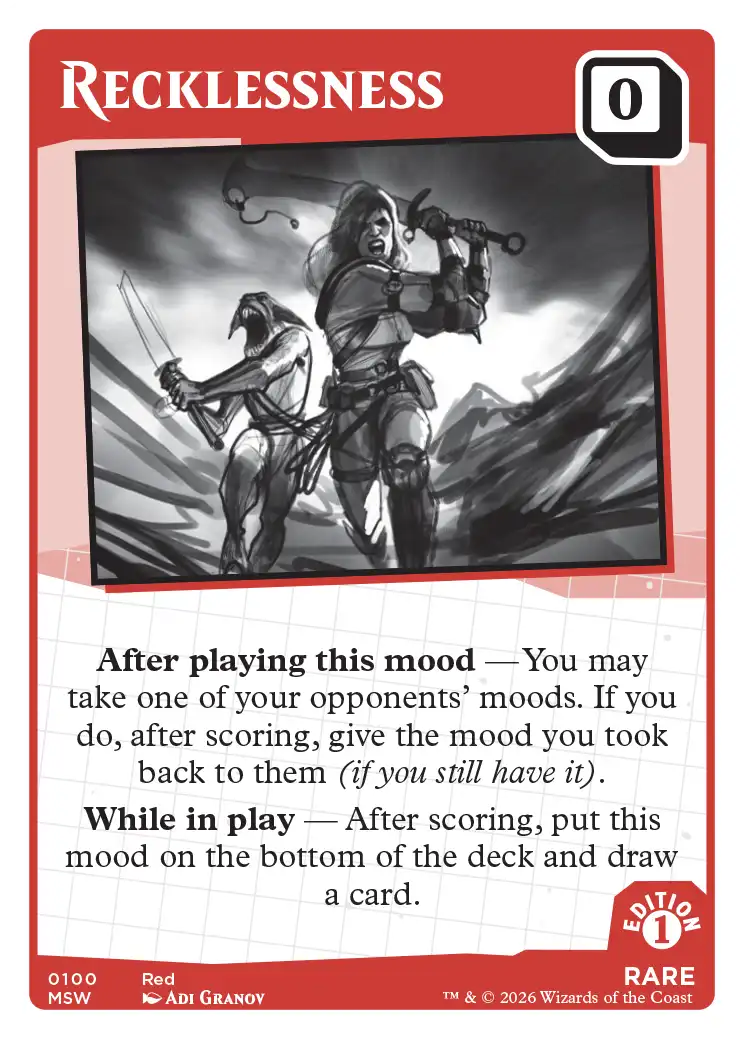
0After playing this mood — You may take one of your opponents' moods. If you do, after scoring, give the mood you took back to them (if you still have it).
While in play — After scoring, put this mood on the bottom of the deck and draw a card.
8 notes
- The player of Recklessness chooses which card gets taken.
- If the deck is empty, the player will draw the card they just put on the bottom.
- When a mood moves from one player to another, all qualities of that card remain the same. This includes its value and whether it's suppressed.
- Moods moving players does not make "After playing this mood" effects happen.
- If Recklessness moves to another player, you still keep the card taken by it.
- If you no longer have the card you took with Recklessness after scoring, you don't give it back. If another player has it, they get to keep it. It can only be returned from you to them.
- Whichever player has Recklessness after scoring is the one who puts it on the bottom of the deck and draws the card.
- If there are two or more "after scoring" effects, they happen in the order they were played this turn. If one player played them both, they get to choose the order in which the effects happen. For example, let's say your opponent played Generosity (it allows an opponent to play an extra card on their next turn) on the previous turn and you play Recklessness and Betrayal, giving Recklessness to an opponent. After scoring, you would choose which "after scoring" effect you want to happen first. If Betrayal happens first, you will get the Relentless card before it goes to the bottom of the deck then draw the card. If you choose to have the Recklessness "after scoring" effect happen first, the player who has Recklessness would put it on the bottom of the deck and they would draw the card.